
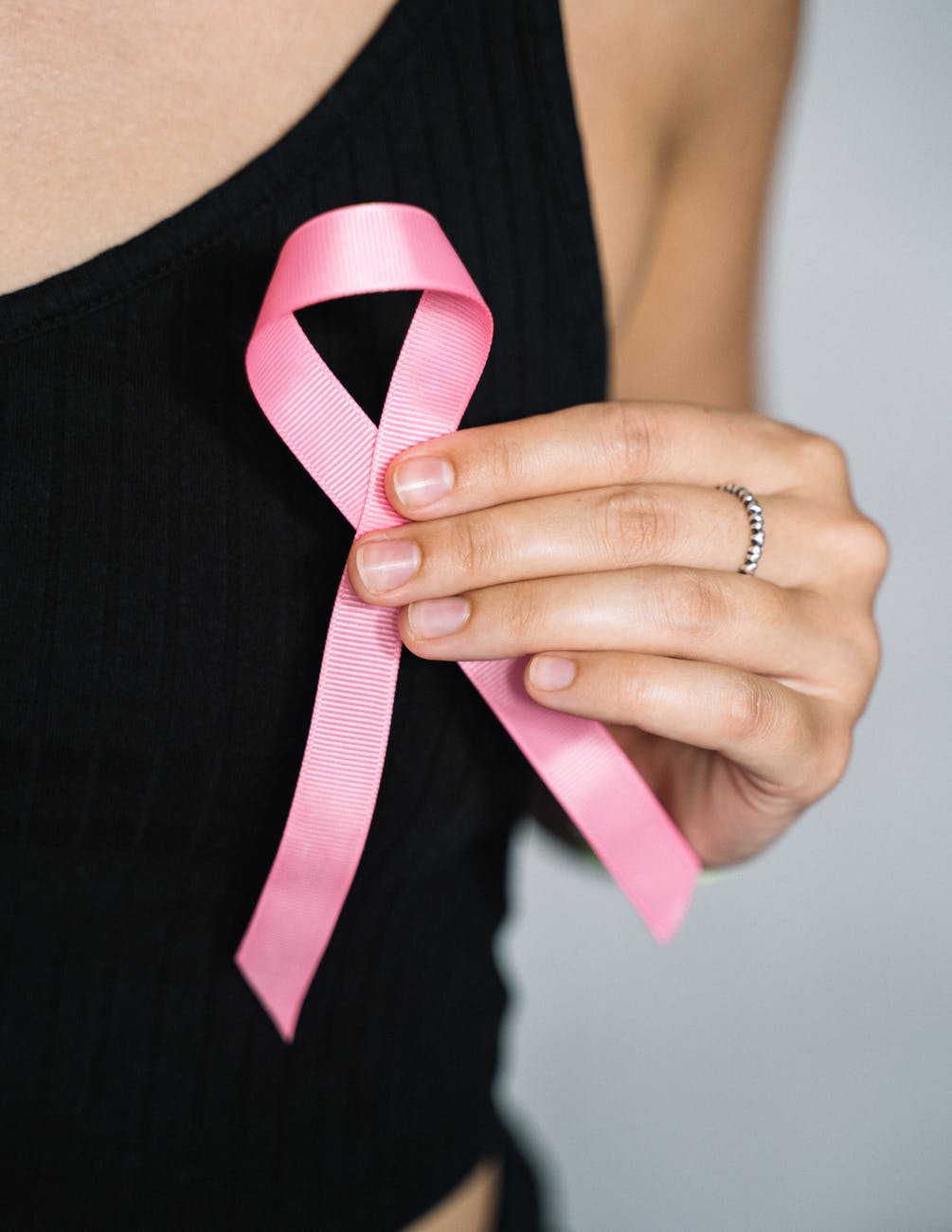
Breast cancer is the most common cancer in the UK, statistics show that around 1 in every 7 women will be diagnosed with breast cancer in their lifetime. The development of breast cancer involves many factors and many of these may also impact breast cancer survival.
Being breast aware and performing self examinations regularly is essential to check for any changes. Making positive dietary and lifestyle choices may also cut the risk of developing breast cancer.
Factors involved in breast cancer
Like many health conditions, breast cancer involves several factors and quite often it is a combination of these that lead to the development of breast cancer. Although advancing age is the main risk factor for developing cancer, research has indicated that the following may also be linked to developing breast cancer:
- Being overweight or obese – around 8% of breast cancer cases are due to being overweight or obese. Fat tissue is known to produce oestrogen and also leads to an increase in inflammation. A high inflammatory state may be involved in cell damage.
- Alcohol – not only impacts the liver and hormone breakdown but research shows that breast cancer risk rises by 9 – 60% if a woman has an increased alcohol intake.
- Smoking – may increase damaging molecules called free radicals that contribute to a situation called oxidative stress where damage to cells occurs. Smoking is also thought to play a role in hormone imbalance.
- Being sedentary – being active may cut the risk of developing breast cancer by 13-25%.
- Breast density – a woman with a larger amount of glandular tissue, compared to fatty tissue, in the breasts may be 3-5 times more likely to develop breast cancer.
- Reproductive factors – an early onset of menstruation, having children later in life, and late onset menopause may all play a role.
- Oral contraceptive use – the effects of oral contraceptives on breast cancer is variable and although it may contribute it may only account for 1% of cases.
- Not breastfeeding – 5% of breast cancers may develop due to not breastfeeding a child.
- HRT – the use of synthetic hormones during the menopause may pose a higher risk of breast cancer compared to oral contraceptive use. However, previous oral contraceptive use before using HRT and other factors, such as lower BMI and duration of HRT use, may further increase risk.
- Endocrine disrupting chemicals – also called xenoestrogens, can be found in plastics, cosmetics and toiletries, detergents, food preservatives and pesticides. They include BPA, dioxins, PCB and phthalates. They are commonly absorbed through the skin or ingested in food and drink and latch on to hormone receptors. Xenoestrogens exert a stronger effect than naturally produced oestrogens.
Breast screening
Self exam

Self examination of breasts regularly is vital to monitor for any changes. As breast tissue is influenced by hormone fluctuations throughout the menstrual cycle, it is best to examine your breasts around a week after your period.
First of all take a look at your breasts in the mirror and check for any dimples, inverted nipples, misshapen breasts or puckering on the skin. Make sure you take a look with arms down at your sides and raised above your head.
For the self exam, it can be useful to lie down as breast tissue will spread out and make it a little easier to feel. Using the three middle fingers (pads not the tips) methodically work around the breast, imagining a clock face, and apply differing pressure from the outside of the breast towards the nipple at each ‘hour’ around the clock.
If you regularly perform a self examination you will get used to the normal feel of your breast tissue but should you be concerned you feel a lump or there are any other change that concerns you it is wise to consult your doctor.
Mammograms
Mammograms are routinely offered every three years to women between the ages of 50 and 70, although they may be offered at an earlier age to women with a family history of breast cancer.
Mammography involves exposing the breast to small amounts of ionising radiation in order to view an x-ray image of the breast tissue. Mammograms may show very small lumps that may not be felt during physical examination of the breast.
Although they are routinely used as a screening tool, mammograms, like most screening methods, are not 100% effective and imaging may be difficult in women with smaller breasts, those with implants, after a mastectomy and also in men.
Magnetic Resonance Imaging (MRI) may be used alongside mammography and involve a strong magnetic field, radio waves and computer technology to produce detailed images of internal body tissues. An MRI may be useful for women at a higher risk of developing breast cancer or for women with dense breast tissue. MRI is not routinely used for breast screening as it may not be suitable for all individuals and they are costly.
Thermal imaging
Thermal imaging, also known as Digital Infrared Thermal Imaging (DITI), involves highly sensitive medical infrared cameras and computer technology to produce high resolution images of temperature variations. Thermal imaging is extremely accurate at showing up very small variations in heat patterns within tissues.
So, why is thermal imaging of use in monitoring breast health? During cell changes, such as in tumour growth, heat is produced around the growth. In addition to this a malignant growth may produce a chemical that increases the development of blood vessels to the growth site; this brings more blood flow and heat. As thermal imaging is extremely sensitive it may show up a “hot spot” at a very early stage. Thermal imaging allows a comparison of heat patterns within adjacent breast tissue and also to the other breast to establish if there are differences.
Apart from being highly accurate, thermal imaging has many other advantages, including:
- Non-invasive and painless – involves no contact with body tissues
- Radiation free
- No side effects
- Very early detection of changes
- Effective in all age groups
- Useful for women with small breasts and for men
- Effective imaging seen with dense breast tissue
- Can be used with breast implants
Each woman’s breast thermal image is unique, much like a fingerprint. Regular breast thermograms give an idea of the individual thermal pattern and a baseline to work from. It is often recommended to undertake breast thermal imaging at yearly intervals.
It is important to note that thermal imaging is very useful for picking up very early changes and that serial infrared imaging can draw attention to areas that require further evaluation or exploration and it is best used alongside other screening methods. Studies show that the 85% sensitivity rate of mammography alone increased to 95% when combined with thermal imaging.
Early detection of changes within the breast can lead to earlier diagnosis of malignant changes – early detection means better survival rates.
Be in the breast of health

Being breast aware and choosing a healthy diet and lifestyle may help to keep you in optimal health. With so many risk factors involved in the development of breast cancer there may be several dietary or lifestyle areas to address. You may wish to:
- Reduce, or give up, alcohol.
- Give up smoking.
- Maintain an optimal body weight – keep an eye on calorie intake.
- Stay active – aim to take part in physical activity on most days.
- Get good daylight exposure – at least 20 -30 minutes each day before noon to not only support vitamin D levels but to set your internal sleep clock.
- Have a good bedtime routine and get quality sleep.
- Ditch the chemicals – give your toiletries and cosmetics an overhaul and choose more natural, chemical free alternatives.
- Eat organic – this may reduce exposure to chemicals from pesticides and fertilisers as organic produce is under stringent guidelines.
- Increase fruit and vegetables – eat at least 8-10 portions of fruit and vegetables daily, with an emphasis on vegetables. They are rich in vitamins, minerals and phytonutrients that support hormone balance. Good choices include broccoli, cauliflower, kale, artichoke, watercress, beetroot, carrot, coriander, blueberries, cranberries, black currants and black berries.
- Eat good fibre – this supports gut health, elimination and prevents recirculation of ‘old’ hormones. Oats, quinoa, buckwheat, brown rice, flax seeds, lentils, beans, chia seeds, nuts and vegetables are all good sources of fibre.
- Include fermented foods – these support vital good gut bacteria. Sauerkraut, kimchi, kombucha, tempeh, miso, natto, and kefir are all more widely available than before.
Making positive dietary and lifestyle changes may address several factors known to impact breast cancer development and may contribute to lowering the risk. Stay breast aware and be in the breast of health.
Kelly
Stay in touch – Join me on Facebook for more health updates
 Kelly Rose Nutrition Consultancy